
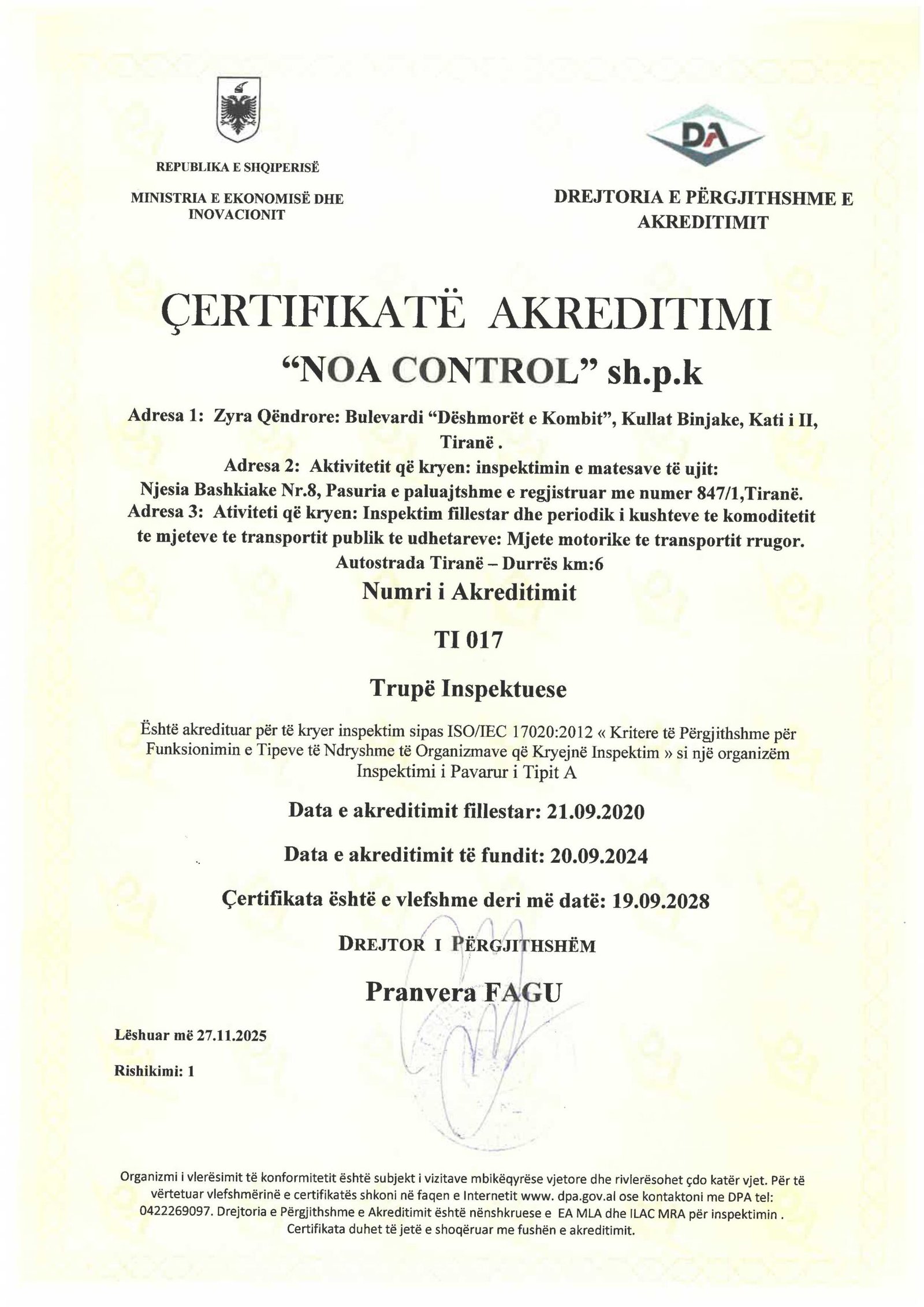
NOA CONTROL Ltd. is accredited by the General Directorate of Accreditation according to the ISO/IEC 17020:2012 standard as a Type A Inspection Body, with accreditation number TI 017, and is an Approved Body by the relevant Ministries.
Improvement of workplace safety and conditions
Timely identification and correction of errors
Increased safety for employees and customers
Better compliance with laws and standards
Reduced risk of fines and sanctions
Improvement of internal organization and processes
Increased efficiency and reduction of long-term costs
Strengthening the entity's image and reputation
Increased trust from clients and partners
Promotion of continuous improvement and professional development
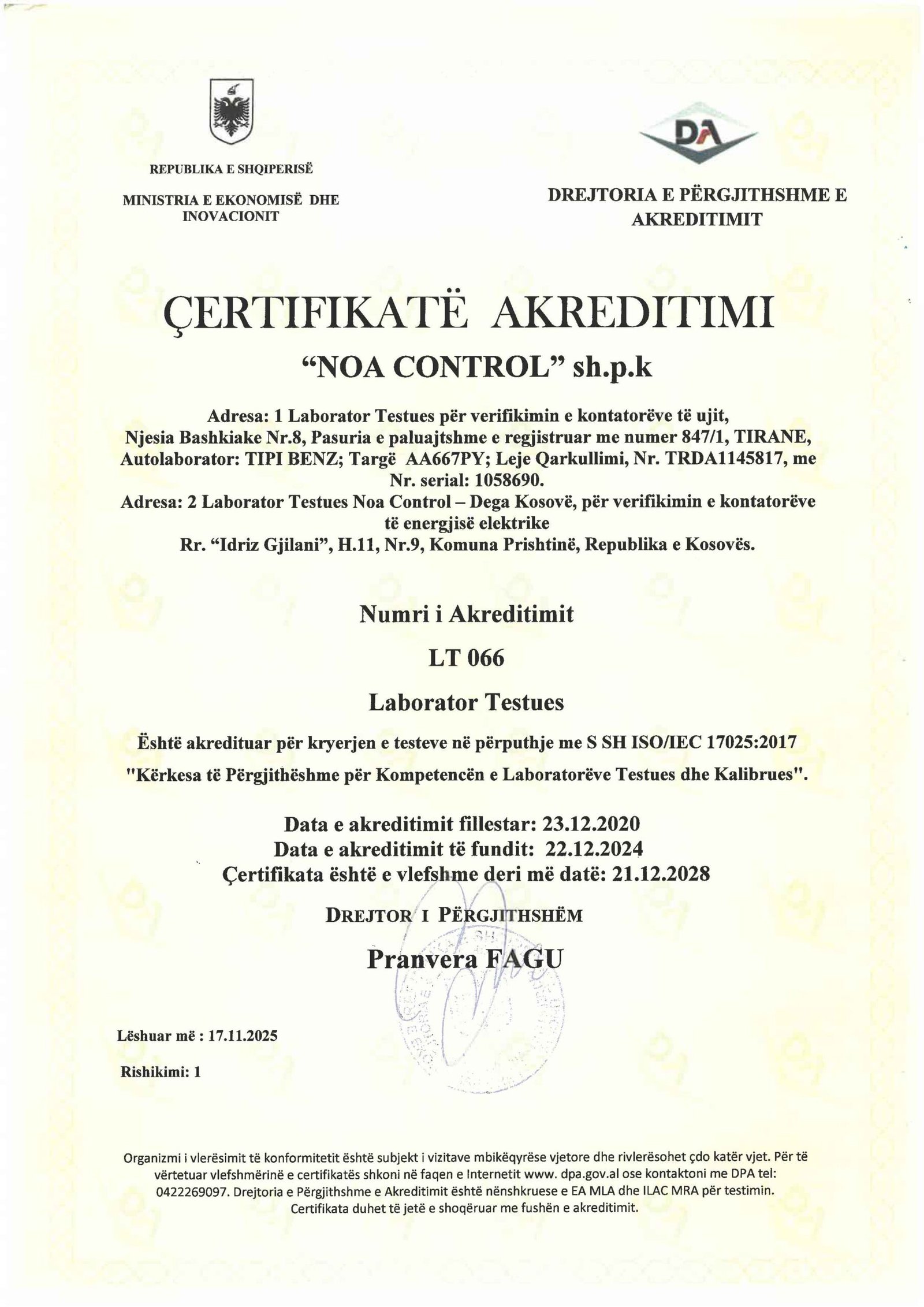
NOA CONTROL Ltd. is accredited by the General Directorate of Accreditation according to the ISO/IEC 17025:2017 standard as a testing laboratory, with accreditation number LT 066, and is authorized by the General Directorate of Metrology.
Official recognition of the laboratory's technical competence.
Higher reliability and accuracy of testing results.
Wider acceptance of results by authorities and clients
Increased trust from clients and business partners
Reduction of the risk of errors and repeated tests
Improvement of quality management and laboratory processes
Better traceability of measurements and results
Competitive advantage over non-accredited laboratories
Facilitation of international cooperation and mutual recognition
Compliance with applicable legal and regulatory requirements
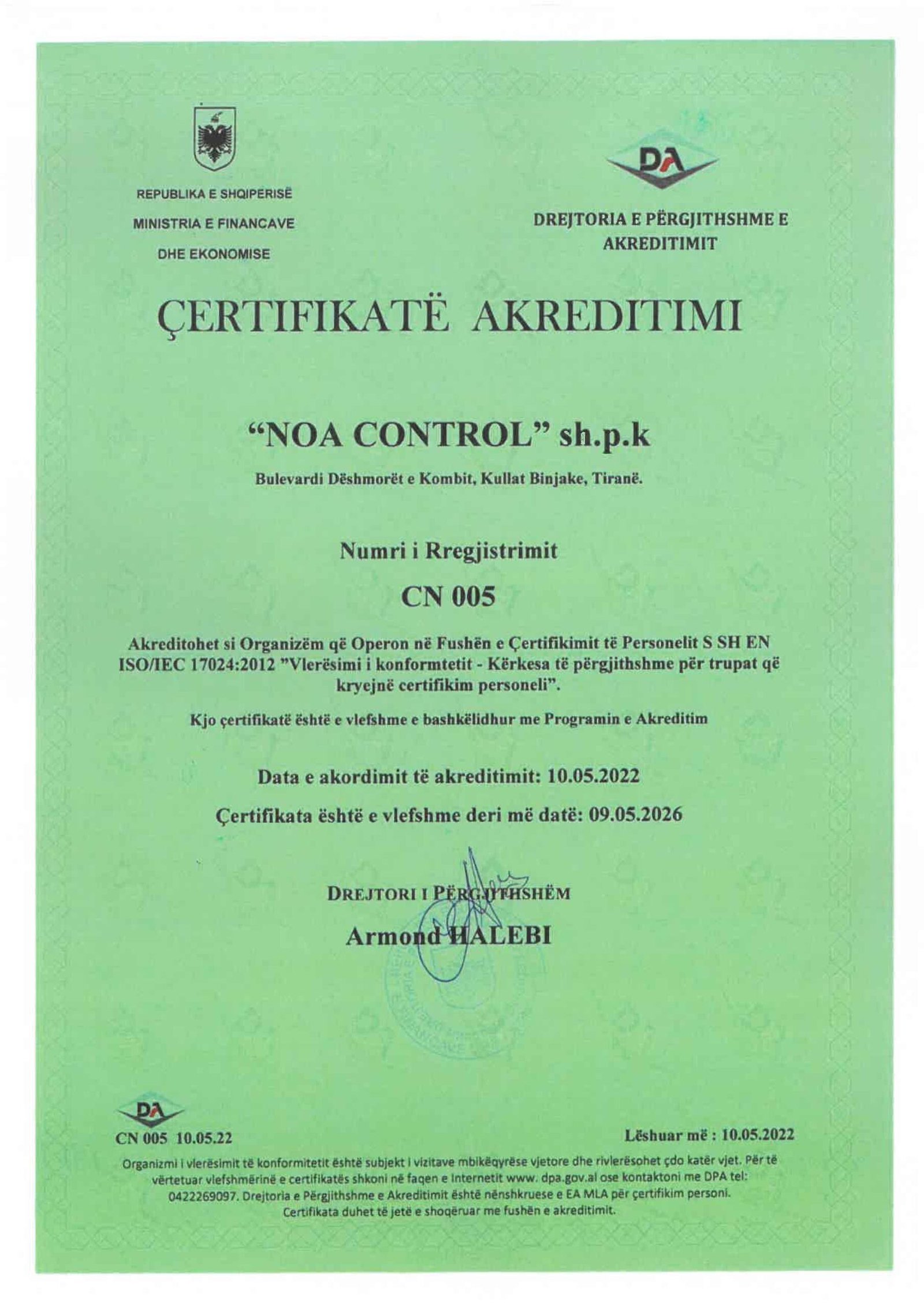
The company NOA CONTROL Ltd is accredited by the General Directorate of Accreditation according to the ISO/IEC 17024:2012 standard as an organization operating in the field of personnel certification, with registration number CN 005 dhe Organ i Miratuar përkatës.
Recognition of the competence and impartiality of the certification process
Higher reliability of issued certificates
Increased trust from clients, institutions, and the market
Transparency and fairness in the assessment of individuals
Compliance with international practices and standards
Wider acceptance of certifications at the national and international level
Reduced risk of conflicts of interest and complaints
Improvement of the organization and management of certification processes
Competitive advantage over non-accredited bodies
Contribution to increasing professionalism and the quality of human resources